I Found Thousands of Aphids on a Dahlia and Lost the Battle

What are Aphids?
Aphids are tiny sap-sucking insects that feed on new plant growth. While a single aphid may not seem like a big deal, these pests reproduce incredibly quickly and can turn into a full-blown infestation before you know it.
Most aphids are small, soft-bodied insects that cluster together on tender stems, flower buds, and the undersides of leaves. They come in a variety of colors, including green, black, yellow, white, and even pink.
Aphids feed by piercing plant tissue and extracting sap, which weakens the plant over time. Heavy infestations can cause distorted leaves, stunted growth, damaged flower buds, and a sticky substance called honeydew to build up on the plant.
In my case, I discovered an overwhelming number of aphids covering a dahlia. What started as a routine garden check quickly turned into a lesson in how fast these tiny insects can take over.
One of the most frustrating things about aphids is how quickly they multiply. So even if you see just a few, act fast because it can quickly turn into a few thousand.
How I knew I was dealing with Aphids
Several leaves on the dahlia were dry, curled, and looked unhealthy. At first glance, it could have been mistaken for underwatering, heat stress, or general plant decline. I assumed it was underwatering because the plant's owner was on vacation and no one has been around to water it.
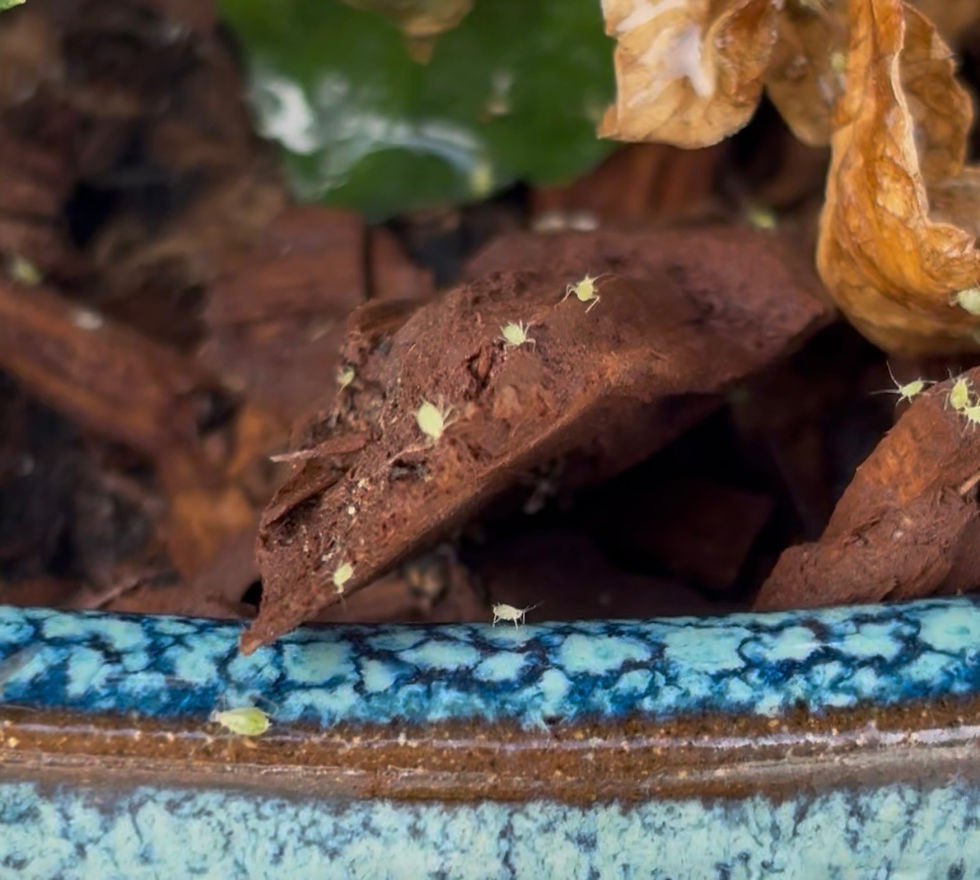
As I took a closer look, I began inspecting the stems and new growth. That's when I saw them. Aphids.
Not just a few aphids, either. There were thousands of them.
They covered the stems, clustered around developing buds, and packed themselves onto the tender new growth. The more I looked, the more I found. What initially seemed like a few damaged leaves quickly turned into one of the worst aphid infestations I've ever seen.
What I tried doing to get rid of them naturally
To be honest, one of the most natural ways to deal with aphids is to remove them from the plant physically.
My first line of defense was the hose.
I sprayed the heck out of the dahlia, hoping the water pressure would knock a large portion of the aphids off the stems and leaves. A strong blast of water can be surprisingly effective against soft-bodied pests like aphids, especially when caught early.
Unfortunately, I was well past the "caught early" stage.
After hosing the plant down, I went in with my pruners and removed every heavily infested stem I could find. Eventually, I cut the dahlia all the way back, hoping that removing the aphids' food source would finally end the infestation. It didn't.
When I returned the next day, the battle was clearly not over. Whatever had been hiding beneath the mulch seemed to emerge overnight and immediately began feeding on what little remained of the plant.
At that point, it became clear just how established the infestation had become. What started as a few curled leaves had turned into a full-scale garden horror story.
Last-ditch effort
If this had been my own plant, and I had more time to work with it, I likely would have introduced ladybugs and let nature help restore balance. Ladybugs are one of the most effective natural predators of aphids and can make a significant dent in a large population.
However, this particular infestation had already reached a point where the dahlia was struggling to recover. After assessing the damage, I advised the plant owner that if she wasn't especially attached to the plant, removing it entirely might be the most practical solution.
As gardeners, we do everything we can to help our plants thrive. We water, fertilize, prune, and protect them from pests. But every once in a while, despite our best efforts, a pest gets the upper hand.
Sometimes the aphids win.

I documented this entire garden horror on my social media, including photos and videos of the infestation. If you're curious what thousands of aphids on a dahlia actually look like, head over to my socials and prepare yourself.
If you're anything like me, it may spark a slightly unhealthy obsession with inspecting every leaf in your garden.

Comments